Call us now :07315122171
 Send Inquiry
Rotary Dryer
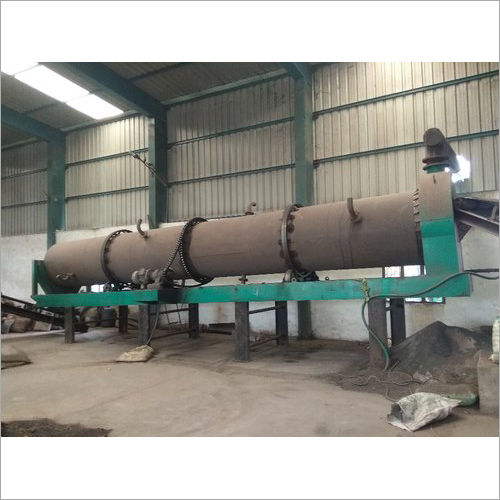

Rotary Dryer Specification
- Heat Source
- Direct or indirect heating
- Power
- 3 Phase Watt (w)
- Power Consumption
- Varies as per capacity
- Fuel Type
- Coal, Gas, Oil, Biomass
- Material
- Mild Steel / Stainless Steel
- Voltage
- 220 to 415 Volt (v)
- Size
- Standard
- Temperature
- Up to 500C
- Technology
- Rotary Drum Drying Technology
- Product Type
- Rotary Dryer
- Dimension (L*W*H)
- Customizable as per capacity
- Warranty
- 1 year
- Noise Level
- Low
- Surface Finish
- Corrosion Resistant Painted / Coated
- Installation Type
- Skid Mounted or Stationary
- Control Panel
- PLC Based Automatic / Manual
- Drive Type
- Gear / Chain
- Operation
- Continuous / Batch
- Moisture Evaporation Rate
- 10 kg/h to 3000 kg/h
- Application
- Suitable for drying minerals, sand, coal, biomass, fertilizer, chemicals, food products
- Product Discharge
- End Discharge with Sealing Arrangement
- Drum Length
- 6 m to 15 m
- Drum Diameter
- 800 mm to 3200 mm
- Capacity
- 0.5 TPH to 50 TPH
- Air Flow
- Co-current or Counter-current
- Rotation Speed
- 2 - 8 rpm
Rotary Dryer Trade Information
- Minimum Order Quantity
- 1 Set
- Supply Ability
- 1000 Sets Per Week
- Delivery Time
- 2-3 Days
- Main Domestic Market
- All India
Rotary Dryer About
Automatic Rotary Dryer is operated very smoothly without spreading any pollution. It is uniformly mix with various dry powder and tiny granules. This dryer is broadly suitable in many industries such as pharmaceuticals, cosmetics, food processing items, chemicals, spices, fertilizers, detergents, plastics and others. Automatic Rotary Dryer is a mechanical device that is used to decrease the limit of fluid dampness. Therefore, provided dryer is lifted by inward blades which doesn't harm while operating with bulky weight of machines.
Payment terms - Online payment accepted.
Versatile Drying Solution
Our rotary dryers cater to various bulk materials, including minerals, sands, biomass, fertilizers, and even food products. With customizable sizes and advanced rotary drum technology, they fulfill the drying requirements across multiple sectors while ensuring reliable operation and consistent end-product quality.
Flexible Installation and Operation
Choose between skid-mounted or stationary installations based on your site requirements. The dryers utilize both end discharge systems with sealing and PLC-based control panels supporting either automatic or manual modes. Continuous or batch processing options are available to fit your workflow.
Efficient and Durable Design
Built from mild steel or stainless steel, our dryers feature corrosion-resistant coatings for long service life. Operating at temperatures up to 500C and capable of using various heat sources, including coal, gas, oil, or biomass, these machines deliver optimal performance with minimal noise and energy consumption.
FAQ's of Rotary Dryer:
Q: How does the rotary dryer remove moisture from materials?
A: The rotary dryer works by using a rotating drum to expose the material to hot air, which evaporates moisture. The airflow direction can be customized as either co-current or counter-current, depending on the application, ensuring efficient drying at controlled temperatures up to 500C.Q: What types of materials can be processed with this rotary dryer?
A: This rotary dryer is suitable for drying minerals, sand, coal, biomass, fertilizers, chemicals, and food products. Its versatile design and adjustable controls make it ideal for various industries that require the removal of moisture from bulk materials.Q: When should I select co-current versus counter-current air flow for my dryer?
A: Co-current air flow is typically chosen for materials that are sensitive to high temperatures at the feed end, as both material and air move in the same direction. Counter-current air flow is preferred for products that can withstand higher inlet temperatures, maximizing moisture evaporation and energy efficiency.Q: Where can these rotary dryers be installed?
A: Our rotary dryers can be installed at manufacturing facilities, processing plants, and industrial sites throughout India. They come with options for skid-mounted or stationary installations, allowing for flexibility based on available space and operational needs.Q: What is the process for maintaining a rotary dryer?
A: Routine maintenance involves inspecting the drum, drive mechanisms, and sealing arrangements. It is important to clean residue buildup, check the corrosion-resistant coatings, and ensure the PLC control panel is functioning properly to maintain optimal performance and extend equipment longevity.Q: How does the PLC-based control panel support operation?
A: The PLC-based control panel allows for precise automatic or manual control of the drying process. It monitors drum speed, temperature, moisture rates, and other parameters to support efficient unattended operation, enhancing safety and process consistency.Q: What are the benefits of using a rotary dryer with customizable dimensions and power options?
A: Customizable dimensions and adaptable power options allow the dryer to fit various processing capacities and space requirements. They improve operational flexibility, satisfy unique project demands, and optimize energy consumption based on the specific characteristics of your materials.Tell us about your requirement

Price:
Quantity
Select Unit
- 50
- 100
- 200
- 250
- 500
- 1000+
Additional detail
Mobile number
Email

More Products in Rotary Dryers Category
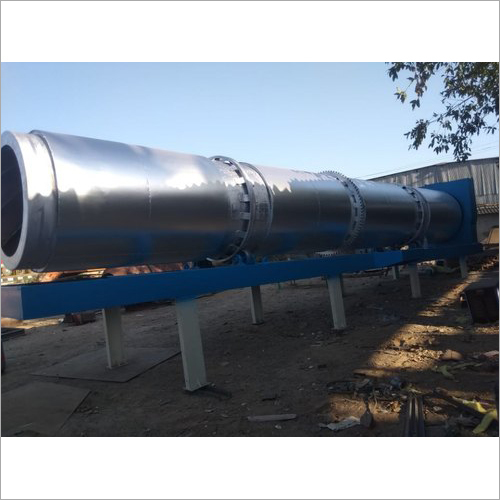
Sand Dryer
Price Range 500000.00 - 4000000.00 INR / Unit
Minimum Order Quantity : 1 Unit
Heat Source : Diesel / LPG / Natural Gas Furnace
Temperature : 150300C
Voltage : 220 to 415 Volt (v)
Warranty : 1 year
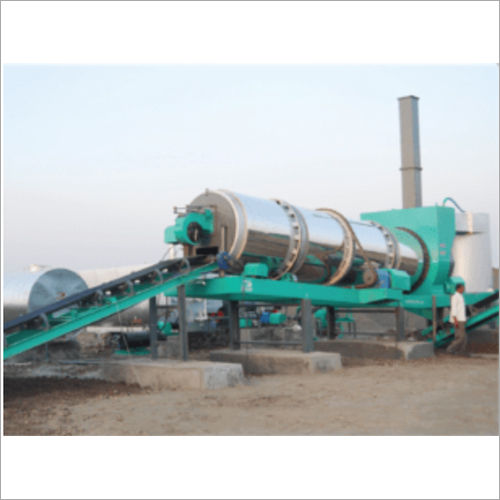
asphalt drum mix plant
Price Range 500000.00 - 4000000.00 INR / Unit
Minimum Order Quantity : 1 Unit
Heat Source : Automatic fully insulated oil or gas fired burner
Temperature : 100180C (asphalt mix output)
Voltage : 220 to 415 Volt (v)
Warranty : 1 year

 Send Inquiry
Our Products

10, Shyam Estate, Zak Gidc,Gandhinagar - 382415, Gujarat, India

Mr Vipul
(Partner)
Mobile :07315122171
 Send Inquiry
 Send SMS
Developed and Managed by Infocom Network Private Limited.
